Are Biracial Babies Less Likely to Have Genetic Defects
Contents
- What are birth defects
- Types of birth defects
- Structural Birth Defects
- Functional or Developmental Nascence Defects
- What are signs of birth defects during pregnancy?
- During Pregnancy: Prenatal Testing
- Screening Tests
- Diagnostic Tests
- After the Baby is Built-in
- During Pregnancy: Prenatal Testing
- Nascency defects list
- Differences in Birth Defect Occurrence by Race/Ethnicity
- Nativity Defects Survival by Race/Ethnicity
- What causes birth defects
- Risk factors for birth defects
- Alcohol nascency defects
- Types of fetal alcohol spectrum disorders
- Birth defects from smoking
- How does smoking during pregnancy damage my health and my baby?
- What are e-cigarettes? Are they safer than regular cigarettes in pregnancy?
- What are the benefits of quitting smoking?
- Genetic nativity defects
- Why practice genetic disorders occur?
- Are genetic disorders always inherited?
- Practice genetic disorders e'er show up in babies?
- What about testing for genetic disorders?
- How to prevent nascence defects
- Plan ahead
- Get 400 micrograms (mcg) of folic acid every twenty-four hour period
- Food sources of folic acid (vitamin B9)
- Run into a healthcare professional person regularly
- Avoid harmful substances
- Avoid booze at any time during pregnancy
- Avert smoking cigarettes
- Avoid marijuana and other drugs
- Prevent infections
- x Tips for Preventing Infections Before and During Pregnancy
- Choose a healthy lifestyle
- Go along diabetes under control
- Strive to reach and maintain a good for you weight
- Talk with your healthcare provider
- Talk to a healthcare provider about taking any medications
- Talk to a healthcare provider about vaccinations (shots)
- Plan ahead
- How are nascency defects diagnosed?
- What are the treatments for birth defects?
- Types of birth defects
What are nascency defects
Birth defects are structural or functional abnormalities present at birth that can cause physical inability, intellectual and developmental disability and other health problems one) . Some birth defects are minor and cause little, if whatever, long term problems. Other birth defects are life threatening or cause significant disability. Most birth defects happen during the first 3 months of pregnancy. Well-nigh ane out of every 33 babies in the United States is born with a nativity defect 2) , that is every iv.5 minutes, a infant is born with a birth defect in the United States. About 150,000 babies are born in the U.s. with a nativity defect each year, many with conditions so rare that about parents — and even some physicians — take never heard of them 3) .
Researchers have identified thousands of dissimilar birth defects, and some are more than disruptive than others. If non detected and treated quickly, some can be fatal or crusade lifelong disabilities. Currently, the Centers for Affliction Control and Prevention notes that nascency defects are the leading crusade of death for infants during the first yr of life.
Birth defects are structural changes present at birth that tin affect virtually whatever part or parts of the body (e.1000., heart, brain, foot). Birth defects may affect how the body looks, works, or both. Nativity defects can vary from balmy to severe. The well-being of each child afflicted with a birth defect depends more often than not on which organ or body role is involved and how much it is affected. Depending on the severity of the defect and what body role is affected, the expected lifespan of a person with a birth defect may or may non exist affected.
Some nativity defects similar cleft lip or neural tube defects are structural bug that tin can be easy to run into. To observe others, similar heart defects, doctors employ special tests. Nativity defects tin can range from mild to astringent.
Non all birth defects can be prevented. But a woman can accept steps to increase her ain chance of having a baby with the all-time health possible.
There are things that a woman can do earlier and during pregnancy to increase her gamble of having a healthy babe:
- Be sure to see your healthcare provider regularly and outset prenatal care as soon as you think y'all might be pregnant.
- Get 400 micrograms (mcg) of folic acrid every 24-hour interval, starting at least one month before getting pregnant.
- Don't drink alcohol, smoke, or use "street" drugs.
- Talk to a healthcare provider about whatever medications you are taking or thinking almost taking. This includes prescription and over-the-counter medications and dietary or herbal supplements. Don't stop or start taking any blazon of medication without first talking with a doctor.
- Learn how to prevent infections during pregnancy.
- If possible, be certain whatsoever medical weather are under command, before becoming pregnant. Some conditions that increase the risk for birth defects include diabetes and obesity.
Causes of birth defects can include:
- Genetics
- Exposures to medicines or chemicals. For case, alcohol abuse can cause fetal alcohol syndrome.
- Infections during pregnancy
- Certain medicines. Before you get pregnant, talk to your health care provider virtually any medicines you have.
- Non getting enough of certain nutrients. For example, not getting enough folic acid before and during pregnancy is a key cistron in causing neural tube defects.
For virtually birth defects, the crusade is unknown.
Health care providers can diagnose certain birth defects during pregnancy, with prenatal tests. That's why information technology of import to go regular prenatal care. Other birth defects may not be plant until after the babe is born. Sometimes the defect is obvious right away. Other times, the health care provider may not notice it until subsequently in life.
Babies who have birth defects often demand special care and interventions to survive and to thrive developmentally. The treatments may include surgery, medicines, assistive devices, and therapies.
Land birth defects tracking programs provide one manner to identify and refer children as early as possible for services they demand. Early intervention is vital to improving outcomes for these babies. If your child has a nativity defect, you should ask his or her dr. about local resources and handling. Geneticists, genetic counselors, and other specialists are another resource.
Types of birth defects
At that place are two main categories of birth defects.
Structural Nativity Defects
Structural nascence defects are related to a problem with the structure of trunk parts. These tin include:
- Cleft lip or scissure palate
- Heart defects, such as missing or misshaped valves
- Abnormal limbs, such as a clubfoot
- Neural tube defects, such as spina bifida, and problems related to the growth and development of the brain and spinal cord
Functional or Developmental Nativity Defects
Functional or developmental birth defects are related to a problem with how a body part or torso system works or functions. These problems can include:
- Nervous system or brain problems.These include intellectual and developmental disabilities, behavioral disorders, spoken language or language difficulties, seizures, and motility problem. Some examples of birth defects that impact the nervous system include Down syndrome, Prader-Willi syndrome, and Fragile X syndrome.
- Sensory problems. Examples include hearing loss and visual problems, such as blindness or deafness.
- Metabolic disorders. These involve issues with certain chemic reactions in the torso, such as conditions that limit the torso's power to rid itself of waste materials or harmful chemicals. Two mutual metabolic disorders are phenylketonuria and hypothyroidism.
- Degenerative disorders. These are weather that might not be obvious at birth but crusade one or more aspects of wellness to steadily get worse. Examples of degenerative disorders are muscular dystrophy and X-linked adrenoleukodystrophy, which leads to problems of the nervous system and the adrenal glands and was the subject of the movie "Lorenzo's Oil."
Some birth defects affect many parts or processes in the body, leading to both structural and functional problems.
What are signs of birth defects during pregnancy?
Nativity defects tin be diagnosed during pregnancy or after the babe is born, depending on the specific type of birth defect.
During Pregnancy: Prenatal Testing
Screening Tests
A screening test is a procedure or test that is washed to see if a woman or her baby might have certain problems. A screening examination does not provide a specific diagnosis—that requires a diagnostic test (run across below). A screening exam tin can sometimes give an abnormal result even when there is zip wrong with the mother or her baby. Less often, a screening test upshot can exist normal and miss a trouble that does exist. During pregnancy, women are usually offered these screening tests to check for nascence defects or other problems for the adult female or her infant. Talk to your doctor about any concerns you have almost prenatal testing.
First Trimester Screening
Start trimester screening is a combination of tests completed between weeks 11 and 13 of pregnancy. Information technology is used to wait for sure birth defects related to the babe's centre or chromosomal disorders, such as Downwardly syndrome. This screen includes a maternal blood test and an ultrasound.
- Maternal Blood Screen
- The maternal claret screen is a elementary claret exam. It measures the levels of two proteins, human chorionic gonadotropin (hCG) and pregnancy associated plasma protein A (PAPP-A). If the protein levels are abnormally loftier or low, at that place could be a chromosomal disorder in the baby.
- Ultrasound
- An ultrasound creates pictures of the baby. The ultrasound for the first trimester screen looks for extra fluid behind the baby'southward neck. If there is increased fluid found on the ultrasound, there could be a chromosomal disorder or middle defect in the baby.
2d Trimester Screening
2nd trimester screening tests are completed between weeks xv and 20 of pregnancy. They are used to expect for sure nativity defects in the baby. Second trimester screening tests include a maternal serum screen and a comprehensive ultrasound evaluation of the baby looking for the presence of structural anomalies (as well known as an anomaly ultrasound).
- Maternal Serum Screen
- The maternal serum screen is a elementary blood examination used to place if a woman is at increased risk for having a infant with certain birth defects, such as neural tube defects or chromosomal disorders such every bit Down's syndrome. It is besides known as a "triple screen" or "quad screen" depending on the number of proteins measured in the mother'southward blood. For example, a quad screen tests the levels of 4 proteins AFP (alpha-fetoprotein), hCG, estriol, and inhibin-A. By and large, the maternal serum screen is completed during the second trimester.
- Anomaly Ultrasound
- An ultrasound creates pictures of the baby. This test is normally completed effectually 18–20 weeks of pregnancy. The ultrasound is used to cheque the size of the baby and looks for nascency defects or other problems with the baby.
Diagnostic Tests
If the issue of a screening test is aberrant, doctors usually offering further diagnostic tests to determine if birth defects or other possible problems with the baby are nowadays. These diagnostic tests are besides offered to women with higher risk pregnancies, which may include women who are 35 years of age or older; women who accept had a previous pregnancy affected by a birth defect; women who have chronic diseases such equally lupus, loftier blood force per unit area, diabetes, or epilepsy; or women who use certain medications.
- High resolution Ultrasound
- An ultrasound creates pictures of the babe. This ultrasound, besides known as a level Two ultrasound, is used to await in more detail for possible nativity defects or other problems with the baby that were suggested in the previous screening tests. Information technology is commonly completed betwixt weeks 18 and 22 of pregnancy.
- Chorionic Villus Sampling (CVS)
- Chorionic Villus Sampling (CVS) is a examination where the doc collects a tiny piece of the placenta, chosen chorionic villus, which is then tested to bank check for chromosomal or genetic disorders in the baby. Generally, a chorionic villus sampling (CVS) test is offered to women who received an abnormal event on a beginning trimester screening exam or to women who could be at higher run a risk. Information technology is completed between 10 and 12 weeks of pregnancy, earlier than an amniocentesis.
- Amniocentesis
- An amniocentesis is test where the doctor collects a small amount of amniotic fluid from the area surrounding the baby. The fluid is then tested to measure the baby'southward poly peptide levels, which might indicate sure nativity defects. Cells in the amniotic fluid can be tested for chromosomal disorders, such every bit Down's syndrome, and genetic problems, such as cystic fibrosis or Tay-Sachs disease. Generally, an amniocentesis is offered to women who received an abnormal result on a screening examination or to women who might be at higher risk. It is completed betwixt 15 and 18 weeks of pregnancy. Beneath are some of the proteins for which an amniocentesis tests.
- AFP: AFP stands for alpha-fetoprotein, a protein the unborn baby produces. A high level of blastoff-fetoprotein (AFP) in the amniotic fluid might mean that the babe has a defect indicating an opening in the tissue, such as a neural tube defect (anencephaly or spina bifida), or a trunk wall defect, such equally omphalocele or gastroschisis.
- Ache: AChE stands for acetylcholinesterase, an enzyme that the unborn baby produces. This enzyme can pass from the unborn baby to the fluid surrounding the babe if there is an opening in the neural tube.
Subsequently the Baby is Built-in
Certain birth defects might non be diagnosed until subsequently the baby is built-in. Sometimes, the birth defect is immediately seen at nascency. For other birth defects including some heart defects, the nascency defect might not be diagnosed until afterwards in life.
When there is a wellness problem with a child, the master intendance provider might wait for birth defects by taking a medical and family history, doing a physical exam, and sometimes recommending further tests. If a diagnosis cannot exist fabricated after the examination, the principal care provider might refer the kid to a specialist in birth defects and genetics. A clinical geneticist is a doctor with special training to evaluate patients who may accept genetic weather or birth defects. Even if a kid sees a specialist, an exact diagnosis might not be reached.
Birth defects listing
- Anencephaly
- Anophthalmia / Microphthalmia
- Anotia/Microtia
- Cleft Lip / Cleft Palate
- Congenital Centre Defects
- Atrial Septal Defect
- Atrioventricular Septal Defect
- Coarctation of the Aorta
- D-Transposition of the Great Arteries
- Hypoplastic Left Centre Syndrome
- Pulmonary Atresia
- Tetralogy of Fallot
- Full Anomalous Pulmonary Venous Return
- Tricuspid Atresia
- Truncus Arteriosus
- Ventricular Septal Defect
- Craniosynostosis
- Diaphragmatic Hernia
- Down's syndrome
- Encephalocele
- Esophageal Atresia
- Gastroschisis
- Hypospadias
- Microcephaly
- Omphalocele
- Spina Bifida
- Upper and Lower Limb Reduction Defects
Tabular array 1. National estimates for 21 selected major birth defects, 2004–2006
| Birth Defects* | Cases per Births | Estimated Almanac Number of Cases |
|---|---|---|
| Adapted for maternal race/ethnicity** | ||
| Central nervous system defects (brain and spinal cord) | ||
| Anencephaly | one in 4,859 | 859 |
| Spina bifida without anencephaly | 1 in 2,858 | one,460 |
| Encephalocele | ane in 12,235 | 341 |
| Middle defects | ||
| Anophthalmia/microphthalmia | ane in five,349 | 780 |
| Cardiovascular defects (center) | ||
| Mutual truncus (besides called Truncus arteriosus) | 1 in 13,876 | 301 |
| Transposition of great arteries | i in 3,333 | 1,252 |
| Tetralogy of Fallot | 1 in 2,518 | 1,657 |
| Atrioventricular septal defect | 1 in ii,122 | 1,966 |
| Hypoplastic left heart syndrome | i in 4,344 | 960 |
| Orofacial defects (middle of the confront) | ||
| Cleft palate without cleft lip | i in ane,574 | ii,651 |
| Crack lip with or without fissure palate | 1 in 940 | iv,437 |
| Gastrointestinal defects (esophagus, stomach, and intestines) | ||
| Esophageal atresia/tracheoesophageal fistula | 1 in 4,608 | 905 |
| Rectal and large abdominal atresia/stenosis | i in ii,138 | i,952 |
| Musculoskeletal defects (muscles and bones) | ||
| Reduction deformity, upper limbs | one in ii,869 | 1,454 |
| Reduction deformity, lower limbs | 1 in v,949 | 701 |
| Gastroschisis | one in two,229 | 1,871 |
| Omphalocele | i in 5,386 | 775 |
| Diaphragmatic hernia | 1 in 3,836 | 1,088 |
| Adapted for maternal age** | ||
| Chromosomal anomalies (extra chromosomes) | ||
| Trisomy 13 | 1 in 7,906 | 528 |
| Trisomy xviii | 1 in 3,762 | 1,109 |
| Trisomy 21 (Down's syndrome) | ane in 691 | 6,037 |
Footnote: The 21 selected major nascency defects exercise not include genitourinary nascency defects, including hypospadias.
*The national estimates data come from fourteen birth defects tracking programs: Arkansas, Arizona, California [eight-county Central Valley], Colorado, Georgia [5-county metropolitan Atlanta], Illinois, Iowa, Kentucky, Massachusetts, North Carolina, Oklahoma, Puerto Rico, Texas, and Utah. The number of live births represented by these fourteen programs from 2004–2006 was iv,038,506.
** For this report, researchers took into business relationship the mother's race/ethnicity and the mother's historic period (for Trisomy 13, 18, and 21), which allows state and local programs to use these estimates equally a signal of reference for comparison with future estimates. Adjustments are based on the The states alive nascence population, 2004–2006.
[Source iv) ]
Differences in Birth Defect Occurrence by Race/Ethnicity
Many nascency defects vary by racial or indigenous grouping. Investigating these differences will help u.s.a. to empathize why some birth defects occur more or less often in certain groups, and will lead to future efforts to reduce these differences.
Listed below are birth defects that accept significantly college or lower occurrence in selected racial and ethnic groups when compared to non-Hispanic white.
The American Periodical of Public Health published a new written report 5) that examined the occurrence of major nativity defects across multiple racial and ethnic groups. Using 12 country-based birth defects tracking systems, this is to date the largest study conducted to look at racial and ethnic differences in the U.s. for a range of nativity defects.
- Compared with non-Hispanic whites, American Indians/Alaska Natives had a significantly higher occurrence of half-dozen) :
- Anotia/Microtia (ear defects)
- Cleft lip with or without scissure palate
- Trisomy 18
- Encephalocele (serious defect of the skull and brain)
- Limb deficiency (when part or all of the arm or leg fails to form completely during pregnancy)
- Cubans and Asians, especially Chinese and Asian Indians, had significantly lower occurrence of many of the studied nativity defects, compared to non-Hispanic whites.
- Some of the studied birth defects had very different rates of occurrence beyond the racial and indigenous groups (either much higher or much lower occurrence compared to non-Hispanic whites). Atmospheric condition that showed substantial variation across the racial and ethnic groups include anotia/microtia, spina bifida (a defect of the spine), and Downward syndrome.
- The researchers recommend further investigation to determine why in that location appeared to be a relatively high occurrence of certain birth defects in American Indians/Alaska Natives.
Table two. Differences in Birth Defect Occurrence by Race/Ethnicity
| Much higher occurrence1 | Much lower occurrence2 | |
|---|---|---|
| American Indian/Alaska Native, Non-Hispanic |
|
|
| Asian, Non-Hispanic |
| |
| Black, Non-Hispanic |
|
|
| Hispanic |
|
|
Footnote:These estimates come from data from 12 birth defects tracking programs: Arizona, Colorado, Florida, Georgia [metropolitan Atlanta], Illinois, Massachusetts, Michigan, Nebraska, New Jersey, New York, North Carolina, and Texas. This written report included 13.five million live U.S. births from 1999 to 2007, meaning ane of every 3 births in the Usa during that time menses was included in the study. Fifty-fifty though programs try to collect information on all occurrences, some birth defects might not be captured by programs if the upshot is not a live nativity. This could underestimate the occurrences of some birth defects.
1 These conditions were found to have significantly higher occurrences in the noted races and ethnicities compared to non-Hispanic white.
2 These conditions were found to have significantly lower occurrences in the noted races and ethnicities compared to not-Hispanic white.
[Source seven) ]
Nascence Defects Survival by Race/Ethnicity
The Journal of Pediatrics viii) has published a new study looking at the survival of babies with major birth defects in the Us using data from 1999-2007. The written report as well compared survival across racial-ethnic groups. Researchers found that for most types of birth defects, there were small-scale to moderate differences in infant and early on childhood survival between racial and ethnic groups. This written report, one of the largest studies of survival among children with birth defects in the Us, provides of import information for those involved in developing health policies and planning for services. For data specific to your child and your child's prognosis, it is of import to consult your healthcare provider.
Survival of babies and children with birth defects can vary past racial or ethnic grouping. Understanding these differences can provide of import information for those involved in developing wellness policies and planning for services.
Key findings from the study ix) :
- For nigh birth defects studied, survival was poorer amongst babies born to non-Hispanic black and Hispanic mothers, compared to babies built-in to non-Hispanic white mothers.
- Small-scale to moderate differences in survival during the first 28 days of life were seen betwixt racial/ethnic groups.
- Compared to babies born to non-Hispanic white mothers,
- survival from 28 days to ane yr of age was poorer among babies born to non-Hispanic black mothers for thirteen of the 21 birth defects studied.
- survival from 28 days to 1 twelvemonth of age was poorer among babies born to Hispanic mothers for x of the 21 birth defects.
- Children with hypoplastic left heart syndrome had the everyman chance of survival across multiple ages (up to 28 days of life, 1 year of life, 2 years of life, and 8 years), compared to children with any other nativity defects studied.
- For babies built-in with the nascency defects listed below, their chances of survival up to one yr of life was greater than 90%:
- Spina bifida
- Crack palate
- Scissure lip with or without cleft palate
- Pyloric stenosis
- Gastroschisis
- Down's syndrome
- Hereafter studies should examine survival among babies or children who needed surgery, those who had some other condition requiring a hospital stay or other procedure, and those who had a severe or complex type of specific birth defects. Because medical care and treatment are improving, survival of babies with nascence defects continues to ameliorate over time. CDC and the National Birth Defects Prevention Network will work together to update these estimates in the future as data becomes available.
Note: The study covered about 39% of U.S. live births during the study period from 1999-2007.
Table 3. Survival of babies and children with selected birth defects
| Birth Defects | Chance of survival to age i a | Chance of survival to historic period 8 b |
|---|---|---|
| Cardinal Nervous Organization Defects | ||
| Spina bifida without anencephalus | 91.9% | 90.2% |
| Encephalocele | 72.one% | 69.ix% |
| Congenital Heart Defects | ||
| Common truncus | 75.ane% | 71.five% |
| Transposition of great arteries | 83.seven% | 81.0% |
| Tetralogy of Fallot | 87.i% | 84.6% |
| Atrioventricular septal defect (AVSD) (without Down's syndrome) | 71.0% | 67.2% |
| Aortic valve stenosis | 83.half-dozen% | 81.five% |
| Hypoplastic left heart syndrome | 55.2% | fifty.iv% |
| Coarctation of the aorta | 84.5% | 81.8% |
| Orofacial Defects | ||
| Cleft palate without fissure lip | 91.0% | 90.3% |
| Cleft lip with or without cleft palate | 91.six% | ninety.8% |
| Gastrointestinal Defects | ||
| Esophageal atresia/tracheoesophageal fistula | 84.half-dozen% | 83.8% |
| Pyloric stenosis | 99.5% | 99.3% |
| Rectal, anal and large abdominal atresia/stenosis | 87.0% | 86.1% |
| Musculoskeletal Defects | ||
| Upper limb deficiencies | 89.3% | 88.2% |
| Lower limb deficiencies | 88.6% | 88.two% |
| Diaphragmatic hernia | 68.7% | 68.0% |
| Gastroschisis | 92.eight% | 92.1% |
| Omphalocele | 71.iv% | 71.2% |
| Chromosomal Defects | ||
| Trisomy 21 (Down syndrome) | 94.one% | 92.8% |
Footnote:
a Children born in 1999-2007 from Arizona, Colorado, Florida, Georgia, Illinois, Massachusetts, Michigan, Nebraska, New Jersey, New York, North Carolina, and Texas.
b Children built-in in 1999-2005 from Arizona, Colorado, Florida, Georgia, Massachusetts, Michigan, New Jersey, New York, Due north Carolina, and Texas.
[Source 10) ]
What causes birth defects
Unlike nascency defects have different causes, and the causes of many birth defects remain unknown.
A specific condition might be caused past one or more of the following primary problems 11) :
- Genetic problems. One or more genes might take a change or mutation that results in them non working properly, such every bit in Frail X syndrome. Similarly, a gene or function of the gene might exist missing.
- Chromosomal issues. In some cases, a chromosome or role of a chromosome might be missing, such as in Turner syndrome, when a female is missing an 10 chromosome. Other nascence defects result from having an extra chromosome, such as in Klinefelter syndrome and Down syndrome.
- Infections. Women who go certain infections during pregnancy are at higher risk for having a child with birth defects. For case, infection with Zika virus during pregnancy is linked with the nativity defect called microcephaly, in which the encephalon and skull are smaller than normal. Zika infection in pregnancy is linked to other structural problems with the encephalon too.
- Exposure to medications, chemicals, or other agents during pregnancy. The infants whose mothers took thalidomide are examples of an exposure leading to birth defects. Other examples include exposure to rubella (also called German measles) and toxic chemicals, such equally hydrocarbons 12) .
Risk factors for birth defects
Birth defects can occur during any pregnancy, just some factors increment the risk for birth defects. The post-obit situations place meaning women at higher risk of having a child with a birth defect 13) :
- Lack of folic acrid. Women who are significant or who could become pregnant should take 400 micrograms of folic acid every day to prevent neural tube defects . However, according to the Centers for Disease Command and Prevention (CDC), merely ii out of every v women of childbearing age accept folic acid every day 14) .
- Drinking alcohol. Drinking booze during pregnancy tin can lead to a variety of issues, including birth defects. For example, using alcohol can lead to fetal alcohol syndrome, which is characterized by intellectual or developmental inability, physical challenges, and behavioral problems. In that location is no safe level of alcohol consumption during pregnancy 15) .
- Smoking cigarettes. Smoking cigarettes during pregnancy can lead to a variety of problems, including lung problems such as asthma. Evidence also strongly suggests that certain birth defects, such as bug with the heart and intestines, are acquired by smoking during pregnancy xvi) .
- Using drugs. Using drugs during pregnancy can increment the adventure of various birth defects, including intellectual or developmental disabilities and behavioral issues, every bit well as pregnancy loss and stillbirth 17) .
- Medication use. Certain medications are known to crusade nascence defects if taken during pregnancy. Thalidomide, which is currently used to treat certain cancers and other serious conditions, was once sold every bit a treatment for morning sickness until information technology was discovered that it caused severe nascency defects. Infants whose mothers took thalidomide had a range of structural and functional problems, including misshapen ears and shortened limbs. Although the thalidomide situation led to much stricter controls on drugs used during pregnancy, the majority of medications currently used by pregnant women have not been tested for rubber or efficacy in significant women. Women who are meaning or who might get significant should discuss all medications, both prescription and over-the-counter, and supplements they have with their health care providers xviii) .
- Infections. Women who get certain infections during pregnancy are at college risk for having a child with birth defects. Some of the more than common infections that are linked to birth defects are cytomegalovirus, a mutual virus that spreads through body fluids and usually causes no symptoms in healthy people, and toxoplasmosis, a parasitic infection that spreads through contact with cat carrion, raw meat, and contaminated food and water. Zika virus infection is linked to microcephaly in newborn babies—a condition in which the encephalon and skull are smaller than normal.
- Obesity or uncontrolled diabetes. Research found that the risk of newborn heart defects and neural tube defects increased with maternal obesity. Additional research suggest that children of obese parents may be at run a risk for developmental delays. Obesity is also associated with other wellness problems and long-term wellness bug. Poorly controlled blood saccharide places women at higher gamble of having a infant who is too large, has breathing problems, or has other poor health outcomes. These outcomes are likely regardless of whether the woman had diabetes before she got pregnant (type 1 or 2 diabetes) or whether she developed diabetes during pregnancy (gestational diabetes) xix) .
- Exposure to things in the environment. Pregnant women who breathe in, eat, drink, or become things into their bodies in other ways may also be at increased risk of nativity defects. For example, pregnant women who are exposed to high levels of radiation, such as cancer treatments, are at higher risk for birth defects in their infants 20) . Handling or animate in certain chemicals tin can also increment the risk of birth defects 21) .
Alcohol nascence defects
There is no known condom amount of alcohol use during pregnancy or while trying to get pregnant 22) . There is also no safe time during pregnancy to drink. All types of alcohol are every bit harmful, including all wines and beer. When a pregnant woman drinks booze, so does her baby 23) . Booze can cause problems for the developing baby throughout pregnancy, including before a woman knows she is pregnant. Drinking alcohol in the outset iii months of pregnancy can crusade the babe to accept abnormal facial features. Growth and key nervous organization problems (e.k., low birthweight, behavioral issues) tin occur from drinking alcohol anytime during pregnancy. The baby's brain is developing throughout pregnancy and can be affected past exposure to alcohol at any fourth dimension.
Women likewise should not drinkable alcohol if they are sexually active and do not use effective contraception (birth control) 24) . This is because a woman might get pregnant and expose her infant to alcohol before she knows she is pregnant. Nearly half of all pregnancies in the United States are unplanned. Almost women will not know they are meaning for up to 4 to 6 weeks.
Fetal alcohol spectrum disorders (FASDs) are a group of weather condition that tin can occur in a person whose female parent drank alcohol during pregnancy. These effects tin include physical issues and problems with behavior and learning. Often, a person with an fetal alcohol spectrum disorder has a mix of these issues.
- Fetal alcohol spectrum disorders (FASDs) are completely preventable if a adult female does not beverage alcohol during pregnancy. Why take the adventure?
- To forestall fetal alcohol spectrum disorders (FASDs), a woman should not potable alcohol while she is meaning, or when she might get pregnant.
- If a woman is drinking alcohol during pregnancy, it is never likewise late to cease drinking. Because brain growth takes place throughout pregnancy, the sooner a woman stops drinking the safer it will be for her and her baby.
Alcohol in the mother's blood passes to the infant through the umbilical cord. Drinking alcohol during pregnancy can crusade miscarriage, stillbirth, and a range of lifelong physical, behavioral, and intellectual disabilities. These disabilities are known as fetal alcohol spectrum disorders (FASDs). Children with fetal alcohol spectrum disorders might have the following characteristics and behaviors:
- Abnormal facial features, such as a smoothen ridge between the nose and upper lip (this ridge is chosen the philtrum)
- Small head size
- Shorter-than-boilerplate height
- Depression body weight
- Poor coordination
- Hyperactive beliefs
- Difficulty with attending
- Poor memory
- Difficulty in schoolhouse (especially with math)
- Learning disabilities
- Spoken communication and language delays
- Intellectual disability (mental retardation) or low IQ
- Poor reasoning and judgment skills
- Sleep and sucking problems equally a infant
- Vision or hearing problems
- Problems with the centre, kidney, or basic
These conditions tin affect each person in different ways, and tin can range from balmy to severe.
Fetal booze spectrum disorders (FASDs) last a lifetime. At that place is no cure for fetal booze spectrum disorders, only research shows that early intervention handling services tin improve a child's development.
There are many types of treatment options, including medication to help with some symptoms, behavior and teaching therapy, parent grooming, and other alternative approaches. No i handling is correct for every kid. Skillful treatment plans volition include close monitoring, follow-ups, and changes every bit needed along the way.
Types of fetal booze spectrum disorders
Dissimilar terms are used to draw fetal alcohol spectrum disorders, depending on the blazon of symptoms.
- Fetal Alcohol Syndrome: Fetal Booze Syndrome represents the almost involved finish of the fetal booze spectrum disorder spectrum. Fetal death is the well-nigh extreme outcome from drinking alcohol during pregnancy. People with fetal alcohol syndrome might have abnormal facial features, growth problems, and central nervous system (CNS) bug. People with fetal alcohol syndrome tin have issues with learning, retention, attention span, communication, vision, or hearing. They might have a mix of these problems. People with fetal alcohol syndrome often take a hard time in school and trouble getting along with others.
- Alcohol-Related Neurodevelopmental Disorder: People with Alcohol-Related Neurodevelopmental Disorder might take intellectual disabilities and problems with behavior and learning. They might do poorly in schoolhouse and have difficulties with math, retentiveness, attention, judgment, and poor impulse control.
- Alcohol-Related Nascency Defects: People with Booze-Related Nascence Defects might have problems with the heart, kidneys, or bones or with hearing. They might accept a mix of these.
- Neurobehavioral Disorder Associated with Prenatal Alcohol Exposure: Neurobehavioral Disorder Associated with Prenatal Alcohol Exposure was get-go included equally a recognized status in the Diagnostic and Statistical Manual 5 (DSM 5) of the American Psychiatric Clan (APA) in 2013 25) . A kid or youth with Neurobehavioral Disorder Associated with Prenatal Alcohol Exposure volition accept bug in three areas: (1) thinking and memory, where the child may have problem planning or may forget cloth he or she has already learned, (2) behavior issues, such as severe tantrums, mood issues (for example, irritability), and difficulty shifting attention from one chore to another, and (3) trouble with twenty-four hour period-to-day living, which can include problems with bathing, dressing for the weather condition, and playing with other children. In addition, to be diagnosed with neurobehavioral disorder associated with prenatal booze exposure, the female parent of the child must take consumed more than minimal levels of booze earlier the child'due south nativity, which American Psychiatric Association defines as more than xiii alcoholic drinks per month of pregnancy (that is, whatever 30-day period of pregnancy) or more than than 2 alcoholic drinks in one sitting.
Birth defects from smoking
Smoking during pregnancy can cause babies to be born likewise small or also early (preterm birth), certain birth defects, and stillbirth. Quitting smoking tin be hard, but it is one of the best ways a woman tin can protect herself and her developing babe. Quitting smoking before getting significant is all-time. But for women who are already pregnant, quitting as early as possible tin can still assist protect against some health problems for their developing babies, such as beingness born too small or too early on. It is never too late to quit smoking.
Smoking during pregnancy can cause babies to exist born besides small or too early on. Women who smoke during pregnancy are more likely to take a baby with a nascency defect of the rima oris and lip called an orofacial crevice.
Babies who breathe in other people's tobacco fume are more than likely to have ear infections and lung infections, like bronchitis and pneumonia; if they have asthma, animate in other people'southward tobacco fume can trigger asthma attacks. These babies are as well more likely to dice from Sudden Infant Death Syndrome (SIDS), a sudden and unexpected infant death that has no immediately obvious crusade after investigation.
How does smoking during pregnancy harm my health and my baby?
Most people know that smoking causes cancer, heart affliction, and other major health bug. Smoking during pregnancy causes additional health problems, including premature birth (existence built-in also early), certain nascency defects, and infant expiry.
- Smoking makes information technology harder for a adult female to get significant.
- Women who smoke during pregnancy are more likely than other women to take a miscarriage.
- Smoking can cause problems with the placenta—the source of the baby's food and oxygen during pregnancy. For example, the placenta tin separate from the womb too early, causing bleeding, which is dangerous to the mother and infant.
- Smoking during pregnancy tin cause a babe to be born also early or to have low birth weight—making it more than probable the infant will be ill and have to stay in the hospital longer. A few babies may even dice.
- Smoking during and subsequently pregnancy is a risk factor of Sudden Infant Decease Syndrome (SIDS). SIDS is an babe death for which a cause of the expiry cannot be found.
- Babies born to women who smoke are more than likely to accept certain nativity defects, like a cleft lip or cleft palate.
What are east-cigarettes? Are they safer than regular cigarettes in pregnancy?
Electronic cigarettes (also called electronic nicotine delivery systems or e-cigarettes) come in unlike sizes and shapes, including "pens," "mods," (i.e., these types are modified by the user) and "tanks." Virtually east-cigarettes comprise a battery, a heating device, and a cartridge to hold liquid. The liquid typically contains nicotine, flavorings, and other chemicals. The battery-powered device heats the liquid in the cartridge into an aerosol that the user inhales.
Although the aerosol of e-cigarettes generally has fewer harmful substances than cigarette smoke, due east-cigarettes and other products containing nicotine are not safety to use during pregnancy. Nicotine is a wellness danger for significant women and developing babies and can damage a developing baby's brain and lungs. Besides, some of the flavorings used in east-cigarettes may exist harmful to a developing baby.
What are the benefits of quitting smoking?
Quitting smoking will help yous feel better and provide a healthier environment for your baby.
When yous cease smoking:
- Your baby will get more oxygen, even after simply one day of not smoking.
- At that place is less risk that your baby will exist born too early.
- In that location is a ameliorate run a risk that your infant volition come habitation from the hospital with you lot.
- You lot will be less likely to develop center disease, stroke, lung cancer, chronic lung disease, and other fume-related diseases.
- You will be more than likely to live to know your grandchildren.
- You will have more than energy and breathe more easily.
- Your dress, hair, and dwelling volition smell better.
- Your food will taste amend.
- You lot volition take more than coin that you tin can spend on other things.
- Yous volition experience proficient about what you lot have washed for yourself and your babe.
Genetic nativity defects
Every prison cell in the body has chromosomes containing genes that decide a person'due south unique characteristics. Genes are one of the bones units of life. Problems with genes can cause health or evolution problems. Some genetic disorders affect people from nascence, others develop later on in life.
During conception, a kid inherits ane of each pair of chromosomes (and 1 of each pair of the genes they contain) from each parent. An error during this process tin crusade a baby to be born with too few or as well many chromosomes, or with a damaged chromosome.
A genetic disorder is a wellness status that comes about because of a problem with a gene or with a chromosome.
A trouble with a single factor is known every bit a cistron mutation. You tin can have a factor mutation without it causing whatsoever issues. Only some gene mutations can cause problems, for case cystic fibrosis, Huntington's disease and hemophilia.
If you have a trouble with a chromosome, that will probably cause noticeable bug. Some people take a missing chromosome, some have an extra chromosome, some have a cleaved chromosome. Down syndrome, Turner syndrome and Klinefelter syndrome are all examples of chromosomal disorders.
A disease or defect also tin happen when just ane parent passes forth the cistron for that disease. This includes birth defects such as achondroplasia (a grade of dwarfism) and Marfan syndrome.
Finally, some boys inherit disorders from genes passed onto them only by their mothers. These defects, which include conditions like hemophilia and color incomprehension, are called X-linked because the genes are carried on the X chromosome.
Why practice genetic disorders occur?
Most genetic disorders occur past chance. Genes and chromosomes are complex, and they frequently get inverse slightly in the formation of new life.
Some disorders are passed down from a parent. If a parent has a damaged gene or chromosome, and that is passed down to a child, the kid's health might be affected.
Still others come about through changes in a person's Deoxyribonucleic acid during their life. For case, radiations from the lord's day tin damage a person's DNA in a mode that it allows skin cancer to develop.
Are genetic disorders always inherited?
Many genetic disorders are inherited, but many others are not. Some occur simply because a piece of genetic material was damaged as it was being passed from parent to child. In that case, a child can take a genetic disorder that the parent does not have. The damage to the gene is known every bit a spontaneous mutation.
Do genetic disorders always testify up in babies?
No. Some genetic conditions can exist seen from birth. Others evidence up during babyhood, boyhood or adult life.
What well-nigh testing for genetic disorders?
Some genetic disorders can be tested for. There are many issues to consider before having genetic testing, such as the effect of a examination on other family members or whether having a test might bear upon your working conditions or your chances of getting insurance. You should non have genetic testing without thinking information technology through carefully.
If you want to discuss testing, it is worth starting with your family unit doctor or a genetic counsellor. A genetic counselor is an expert in working with families to discuss genetic conditions. They can talk to you lot near whether testing is available, the benefits and risks of testing, about privacy and confidentiality, near piece of work and insurance, and almost talking to members of your family. They generally work with other experts in genetics.
Resources for locating a genetics professional in your community are bachelor online:
- The National Order of Genetic Counselors (https://world wide web.findageneticcounselor.com/) offers a searchable directory of genetic counselors in the United States and Canada. You tin can search by location, proper name, surface area of exercise/specialization, and/or Cypher Code.
- The American Lath of Genetic Counseling (https://www.abgc.net/about-genetic-counseling/discover-a-certified-advisor/) provides a searchable directory of certified genetic counselors worldwide. You tin search by practice area, name, organization, or location.
- The Canadian Association of Genetic Counsellors (https://www.cagc-accg.ca/index.php?page=225) has a searchable directory of genetic counselors in Canada. You can search past name, distance from an address, province, or services.
- The American Higher of Medical Genetics and Genomics (http://www.acmg.internet/ACMG/Genetic_Services_Directory_Search.aspx) has a searchable database of medical genetics clinic services in the United states.
- The National Cancer Institute provides a Cancer Genetics Services Directory (https://www.cancer.gov/about-cancer/causes-prevention/genetics/directory), which lists professionals who provide services related to cancer genetics. You can search by type of cancer or syndrome, location, and/or provider name.
If yous have a wellness condition that has not been diagnosed, you lot may exist interested in the Undiagnosed Diseases Network (https://undiagnosed.hms.harvard.edu/). They accept information virtually how to utilize for this multicenter research study.
How to prevent birth defects
Experts know that not all birth defects tin be prevented. Only, experts too know that women tin increase their chances of having a healthy infant past managing health atmospheric condition and adopting healthy behaviors before condign pregnant. Brand a pact, a commitment to yourself, to go healthy before and during pregnancy past actively trying to plan ahead, avoid harmful substances, choose a healthy lifestyle, and talk with your healthcare provider.
Plan ahead
Become 400 micrograms (mcg) of folic acid every 24-hour interval
- Folic acid is a vitamin B9. If a woman has enough folic acrid in her body at least one month before and during pregnancy, information technology can assistance prevent major birth defects of the developing encephalon and spine (anencephaly and spina bifida). Women can get folic acid from fortified foods or supplements, or a combination of the two, in improver to a varied diet rich in folate.
- Women who are of childbearing historic period should take at least 400 micrograms (mcg) of a folic acid supplement every twenty-four hour period in addition to that establish in fortified foods.
- Meaning women should take add 600 micrograms a day, or chiliad micrograms a twenty-four hour period if expecting twins.
Folic acid is available in multivitamins and prenatal vitamins, supplements containing other B-complex vitamins, and supplements containing only folic acrid. Common doses range from 400 to 800 mcg in supplements for adults and 200 to 400 mcg in children'southward multivitamins 26) .
Virtually 85% of supplemental folic acid, when taken with food, is bioavailable 27) . When consumed without food, nearly 100% of supplemental folic acid is bioavailable.
Table four lists the current Recommended Dietary Allowances (RDAs) for folate as mcg of dietary folate equivalents (DFEs). Recommended Dietary Allowance (RDA) is the boilerplate daily level of intake sufficient to come across the nutrient requirements of nearly all (97%–98%) healthy individuals; often used to programme nutritionally adequate diets for individuals.
The Food and Nutrition Board of the Institute of Medicine developed dietary folate equivalents (DFEs) to reflect the higher bioavailability of folic acrid than that of food folate. At least 85% of folic acid is estimated to be bioavailable when taken with food, whereas only about l% of folate naturally present in food is bioavailable 28) . Based on these values, the Food and Nutrition Board defined dietary folate equivalent (DFE) as follows:
- 1 mcg DFE = 1 mcg nutrient folate
- one mcg DFE = 0.6 mcg folic acid from fortified foods or dietary supplements consumed with foods
- i mcg DFE = 0.5 mcg folic acrid from dietary supplements taken on an empty stomach
Factors for converting mcg DFE to mcg for supplemental folate in the course of 5-methyl-THF take not been formally established 29) .
For infants from birth to 12 months, the Food and Diet Lath of the Institute of Medicine established an Adequate Intake (intake at this level is causeless to ensure nutritional adequacy; established when evidence is insufficient to develop an Recommended Dietary Allowance [RDA]) for folate that is equivalent to the mean intake of folate in good for you, breastfed infants in the U.s.a. (meet Table four).
Infants
- 0 to 6 months: 65 mcg/mean solar day*
- 7 to 12 months: 80 mcg/day*
*For infants from birth to 12 months, the Food and Nutrition Board established an Acceptable Intake (AI) for folate that is equivalent to the mean intake of folate in salubrious, breastfed infants in the The states.
Children
- 1 to three years: 150 mcg/solar day
- 4 to eight years: 200 mcg/twenty-four hour period
- 9 to 13 years: 300 mcg/day
Adolescents and adults
- Males, age xiv and older: 400 mcg/twenty-four hour period
- Females, age xiv and older: 400 mcg/day
- Pregnant females of all ages: 600 mcg/day
- Breastfeeding females of all ages: 500 mcg/day
Table four: Recommended Dietary Allowances (RDAs) for Folate
| Age | Male | Female | Pregnancy | Lactation |
|---|---|---|---|---|
| Nativity to vi months* | 65 mcg DFE* | 65 mcg DFE* | ||
| 7–12 months* | eighty mcg DFE* | 80 mcg DFE* | ||
| 1–iii years | 150 mcg DFE | 150 mcg DFE | ||
| 4–eight years | 200 mcg DFE | 200 mcg DFE | ||
| 9–13 years | 300 mcg DFE | 300 mcg DFE | ||
| 14–eighteen years | 400 mcg DFE | 400 mcg DFE | 600 mcg DFE | 500 mcg DFE |
| xix+ years | 400 mcg DFE | 400 mcg DFE | 600 mcg DFE | 500 mcg DFE |
[Source 30) ]
Nutrient sources of folic acid (vitamin B9)
Table five: Selected Nutrient Sources of Folate and Folic Acid
| Food | Micrograms (mcg) per serving | Pct DV* |
|---|---|---|
| Beef liver, braised, 3 ounces | 215 | 54 |
| Spinach, boiled, ½ cup | 131 | 33 |
| Blackness-eyed peas (cowpeas), boiled, ½ loving cup | 105 | 26 |
| Breakfast cereals, fortified with 25% of the DV† | 100 | 25 |
| Asparagus, boiled, 4 spears | 89 | 22 |
| Brussels sprouts, frozen, boiled, ½ cup | 78 | 20 |
| Lettuce, romaine, shredded, 1 cup | 64 | 16 |
| Avocado, raw, sliced, ½ loving cup | 59 | 15 |
| Spinach, raw, ane cup | 58 | 15 |
| Rice, white, medium-grain, cooked, ½ cup† | 54 | 14 |
| Broccoli, chopped, frozen, cooked, ½ cup | 52 | 13 |
| Mustard greens, chopped, frozen, boiled, ½ cup | 52 | 13 |
| Dark-green peas, frozen, boiled, ½ cup | 47 | 12 |
| Kidney beans, canned, ½ cup | 46 | 12 |
| Spaghetti, cooked, enriched, ½ cup† | 45 | xi |
| Wheat germ, 2 tablespoons | 40 | 10 |
| Love apple juice, canned, ¾ loving cup | 36 | 9 |
| Crab, Dungeness, 3 ounces | 36 | 9 |
| Orange juice, ¾ cup | 35 | 9 |
| Breadstuff, white, 1 slice† | 32 | 8 |
| Turnip greens, frozen, boiled, ½ loving cup | 32 | 8 |
| Peanuts, dry roasted, 1 ounce | 27 | 7 |
| Orange, fresh, 1 small | 29 | 7 |
| Papaya, raw, cubed, ½ cup | 27 | seven |
| Assistant, 1 medium | 24 | 6 |
| Yeast, baker's, ¼ teaspoon | 23 | 6 |
| Egg, whole, hard-boiled, 1 large | 22 | 6 |
| Cantaloupe, raw, cubed, ½ cup | 17 | 4 |
| Vegetarian baked beans, canned, ½ cup | xv | 4 |
| Fish, halibut, cooked, three ounces | 12 | 3 |
| Milk, ane% fat, one cup | 12 | 3 |
| Ground beef, 85% lean, cooked, three ounces | seven | ii |
| Chicken breast, roasted, 3 ounces | 3 | 1 |
Footnotes:
* DV = Daily Value. The FDA developed DVs to help consumers compare the nutrient contents of products within the context of a total nutrition. The Daily Value (DV) for folate used for the values in Table 5 is 400 mcg for adults and children historic period 4 years and older 31) . This Daily Value (DV), however, is irresolute to 400 mcg DFE as the updated Nutrition and Supplement Facts labels are implemented 32) . Manufacturers will use the following conversion factors: i mcg DFE = 1 mcg naturally occurring folate = 0.6 mcg folic acrid. The updated labels and DVs must appear on nutrient products and dietary supplements first in January 2020, but they can exist used now 33) . The FDA does non require food labels to listing folate content unless a food has been fortified with this food. Foods providing twenty% or more of the DV are considered to exist high sources of a nutrient, only foods providing lower percentages of the DV also contribute to a healthful diet.
† Fortified with folic acrid equally part of the folate fortification programme.
[Source 34) ]
Fortified means that vitamins have been added to the food. Many foods are now fortified with folic acid. Some of these are:
- Enriched breads
- Cereals
- Flours
- Cornmeals
- Pastas
- Rice
- Other grain products
There are also many pregnancy-specific products on the market that have been fortified with folic acid. Some of these are at levels that meet or exceed the RDA for folate. Women should be conscientious about including a high corporeality of these products in their diets forth with their prenatal multivitamin. Taking more is non needed and does non provide any added do good.
The tolerable upper intake level for folic acid is k micrograms (mcg) a solar day. This limit is based on folic acrid that comes from supplements and fortified foods. It does not refer to the folate found naturally in foods.
See a healthcare professional regularly
A woman should be certain to see her doctor when planning a pregnancy and start prenatal care as shortly as she thinks that she is meaning. It is important to see the doctor regularly throughout pregnancy, so a woman should keep all her prenatal care appointments. If you are trying to accept a infant or are only thinking about it, information technology is non also early to start getting prepare for pregnancy. Employ these checklists to assist you write down your goals, whether y'all are planning a pregnancy or trying to get and stay healthy overall.
Effigy one. Steps for healthier pregnancy and babe
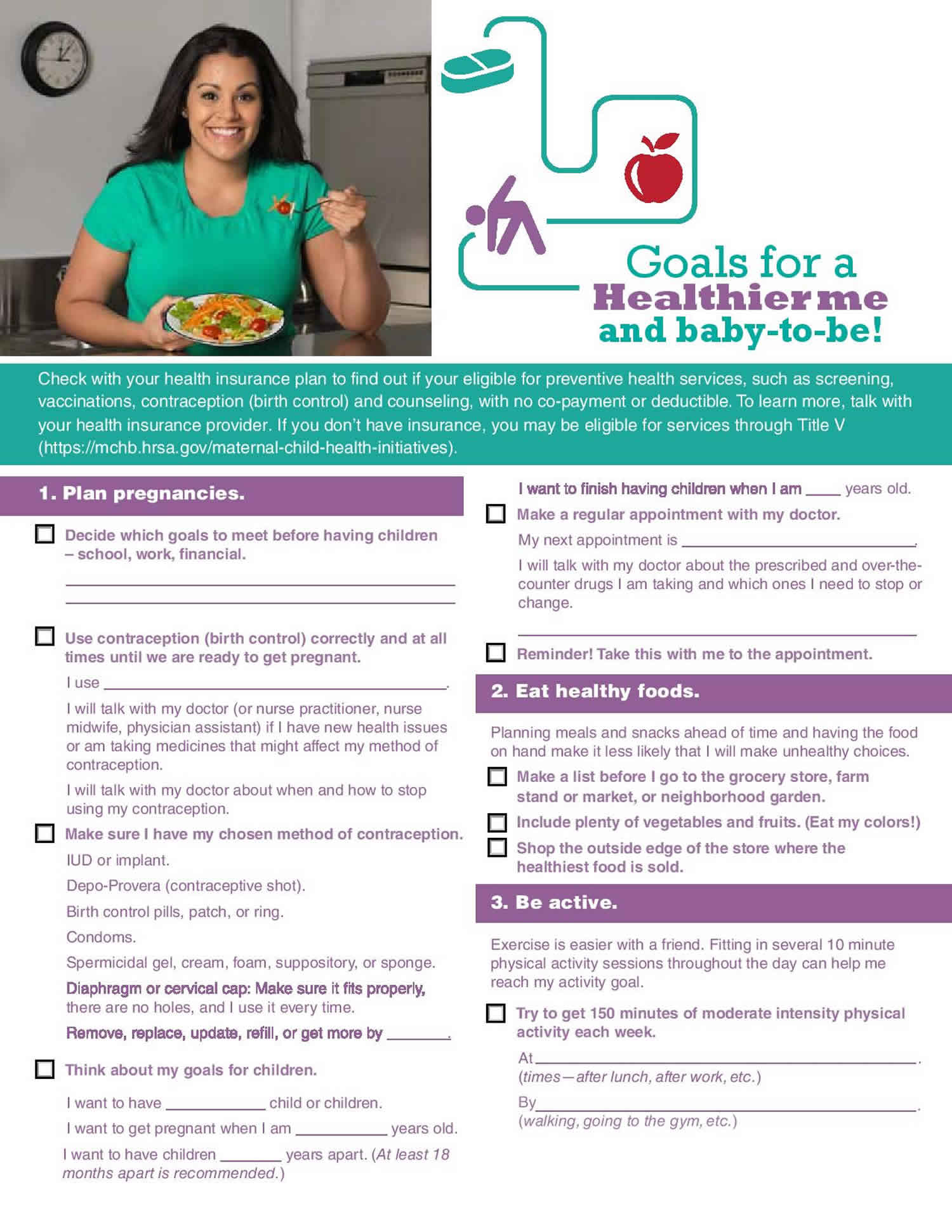

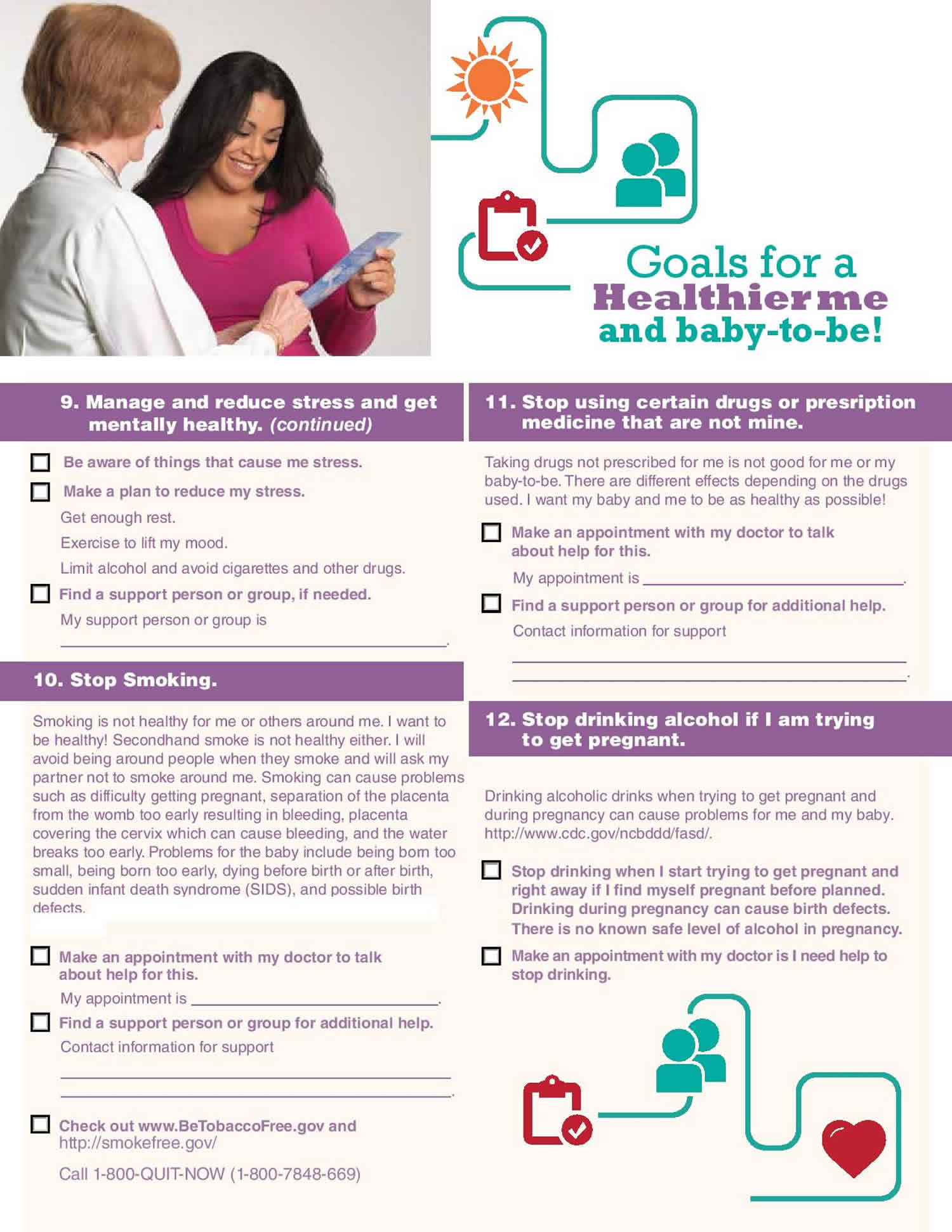
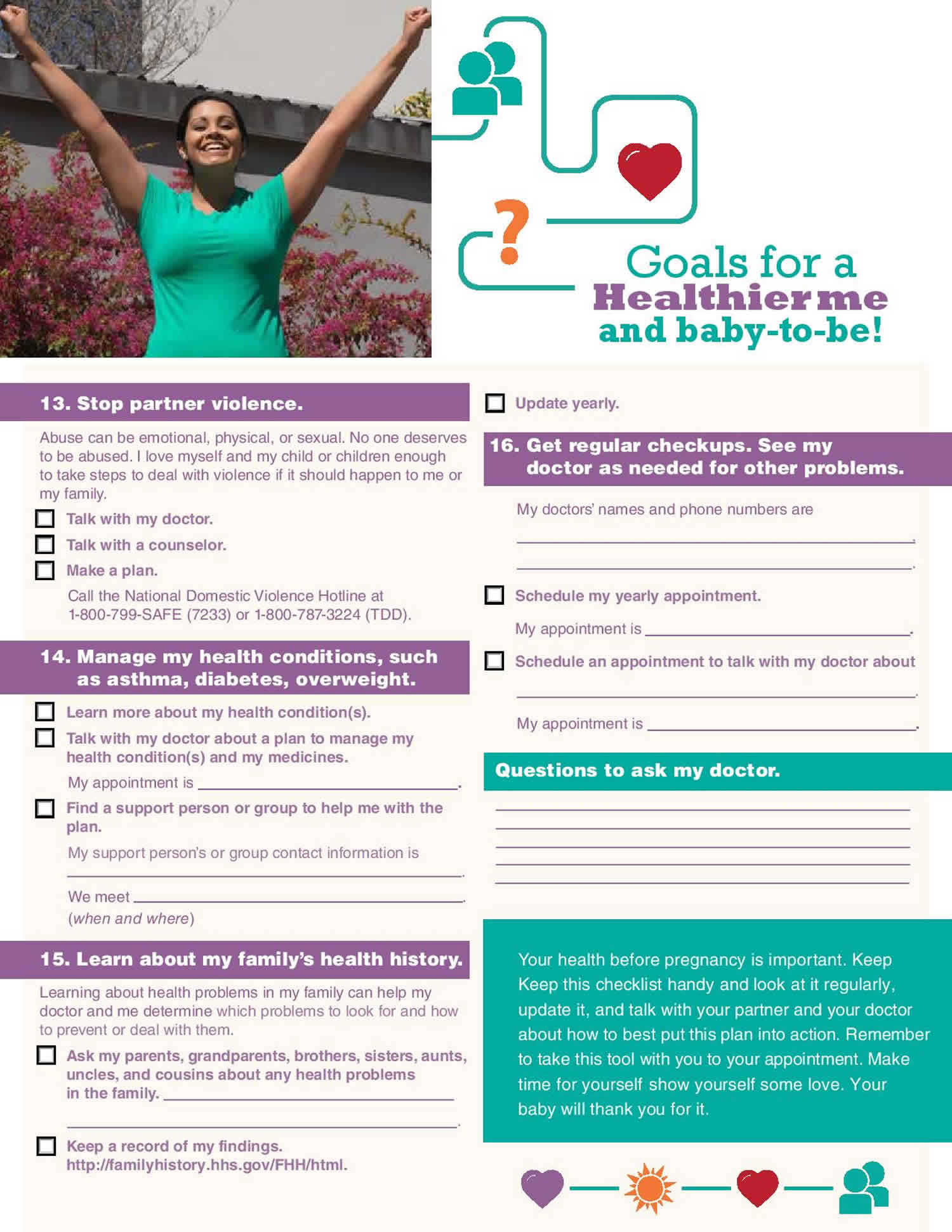
[Source (https://www.cdc.gov/preconception/showyourlove/documents/Healthier_Baby_Me_Plan-508.pdf) ]
Avoid harmful substances
Avoid alcohol at any time during pregnancy
Alcohol in a woman'southward bloodstream passes to the developing baby through the umbilical cord. There is no known rubber corporeality of alcohol use during pregnancy or while trying to get pregnant. There is also no safety fourth dimension during pregnancy to drink. All types of alcohol are every bit harmful, including wine and beer. Drinking alcohol during pregnancy can cause miscarriage, stillbirth, and a range of lifelong physical, behavioral, and intellectual disabilities. These disabilities in the child, which occur considering the female parent drank alcohol during the pregnancy, are known every bit fetal alcohol spectrum disorders. The best advice for women is to end drinking alcohol when trying to get pregnant.
Avoid smoking cigarettes
The dangers of smoking during pregnancy include preterm nativity, certain nascency defects (cleft lip or cleft palate), and infant decease. Even existence around tobacco fume puts a adult female and her pregnancy at run a risk for bug. Quitting smoking earlier getting pregnant is all-time. For a adult female who is already meaning, quitting as early every bit possible can still help protect against some health problems for the babe, such as low birth weight. It's never as well tardily to quit smoking.
Avoid marijuana and other drugs
A woman who uses marijuana or other drugs during pregnancy tin can have a babe who is born preterm, of depression birth weight, or has other health problems, such as birth defects. Marijuana is the illicit drug virtually commonly used during pregnancy. Since nosotros know of no safe level of marijuana use during pregnancy, women who are pregnant, or because condign pregnant, should not use marijuana, fifty-fifty in states where marijuana is legal. Women using marijuana for medical reasons should speak with their doctor virtually an alternative therapy with pregnancy-specific rubber data.
Preclude infections
Some infections that a woman tin can become during pregnancy can exist harmful to the developing infant and tin fifty-fifty crusade nativity defects. Check out our 10 tips for preventing infections earlier and during pregnancy.
10 Tips for Preventing Infections Earlier and During Pregnancy
Some infections earlier and during pregnancy can hurt both you lot and your developing fetus. They can cause serious illness, birth defects, and lifelong disabilities, such equally hearing loss or learning problems. Hither are 10 tips to assistance prevent infections earlier and during pregnancy:
- Protect yourself from Zika virus
- Zika virus can be passed from a significant woman to her fetus during pregnancy or to her baby effectually the time of birth. Zika virus infection during pregnancy can cause microcephaly (a birth defect where a baby's head and brain are smaller than babies of the same age and sexual practice) and other severe encephalon defects.
- If you are meaning, exercise not travel to areas with Zika (see map here: https://world wide web.cdc.gov/zika/geo/index.html).
- If you must travel to an area with Zika, talk to your doctor or other healthcare provider first and strictly follow steps to prevent mosquito bites during the trip.
- If you have a partner who lives in or has traveled to an expanse with Zika, use condoms from start to finish, every time you take sex (vaginal, anal, or oral) to protect against infection or practice not have sex during the pregnancy.
- If you are trying to become meaning
- Talk with your healthcare provider before traveling to areas with Zika and strictly follow steps to prevent mosquito bites during the trip.
- Run across CDC's advice for men and women who are thinking about pregnancy here (https://www.cdc.gov/pregnancy/zika/women-and-their-partners.html).
- If you are meaning, exercise not travel to areas with Zika (see map here: https://world wide web.cdc.gov/zika/geo/index.html).
- Zika virus can be passed from a significant woman to her fetus during pregnancy or to her baby effectually the time of birth. Zika virus infection during pregnancy can cause microcephaly (a birth defect where a baby's head and brain are smaller than babies of the same age and sexual practice) and other severe encephalon defects.
- Wash your hands with soap and water after the following:
- Using the bath
- Touching raw meat, raw eggs, or unwashed vegetables
- Preparing nutrient and eating
- Gardening or touching dirt or soil
- Handling pets
- Existence effectually people who are sick
- Getting saliva (spit) on your hands
- Caring for and playing with children
- Changing diapers
- Reduce contact with saliva and urine from babies and young children
- A mutual virus called cytomegalovirus (CMV) can cause issues for some babies, including microcephaly and hearing loss. A woman who is infected with cytomegalovirus can laissez passer the virus to her developing infant during pregnancy. Women may be able to lessen their chance of getting cytomegalovirus by reducing contact with saliva and urine from babies and young children. Some ways to practise this are by non sharing food and utensils with babies and young children, and washing hands afterward changing diapers. These deportment can't eliminate your risk of getting cytomegalovirus, merely may lessen your chances of getting it.
- Avert unpasteurized (raw) milk and foods fabricated from it.
- Do non swallow soft cheeses, such as feta, brie, and queso fresco, unless they have labels that say they are pasteurized. Unpasteurized products can contain harmful bacteria.
- Do not touch or change dirty cat litter.
- Have someone else do information technology. If you must change the cat litter yourself, be sure to wear gloves and launder your easily later on. Muddied cat litter might contain a harmful parasite.
- Stay away from wild or pet rodents and their droppings.
- Take a pest control professional get rid of pests in or around your abode. If you have a pet rodent, like a hamster or guinea sus scrofa, have someone else care for it until after your baby arrives. Some rodents might behave a harmful virus.
- Become tested for sexually transmitted diseases (STDs), such as HIV and hepatitis B, and protect yourself from them.
- Some people that have HIV, hepatitis B, or an sexually transmitted disease (STD) do not feel sick. Knowing if you have 1 of these diseases is important. If you practise, talk to your healthcare provider about reducing the chance that your babe volition become sick. Acquire more about sexually transmitted diseases (STDs).
- Talk to your healthcare provider about vaccinations (shots).
- Some vaccinations are recommended earlier you become meaning, during pregnancy, or correct after delivery. Having the right vaccinations at the right time can assistance keep y'all good for you and assist keep your baby from getting very sick or having life-long health bug.
- Avert people who have an infection.
- If yous have not notwithstanding had or did not have the vaccine before pregnancy, stay away from people who y'all know have infections, such as chickenpox or rubella.
- Ask your doctor most group B strep.
- Most one in iv women carry this type of bacteria, only do not experience sick. An easy swab test near the end of pregnancy will prove if yous have this type of bacteria. If you lot practice accept group B strep, talk to your healthcare provider well-nigh how to protect your babe during labor.
These tips can help yous preclude infections that could damage you and your developing baby. Y'all will not always know if yous accept an infection and sometimes you will not feel ill. If yous think y'all might have an infection or think you are at take a chance, see your healthcare provider. Be sure to talk with your healthcare provider to learn more than nearly condom food preparation, wearing insect repellent when outside, taking medicine, and other important topics.
Choose a healthy lifestyle
Continue diabetes under command
Poor control of diabetes during pregnancy increases the chances for birth defects and other problems for the pregnancy. It can also cause serious complications for the woman. Proper healthcare before and during pregnancy can help prevent birth defects and other poor outcomes.
Strive to reach and maintain a healthy weight
A woman who is obese (a body mass index [BMI] of 30 or college) before pregnancy is at a higher take a chance for complications during pregnancy. Obesity too increases a pregnant woman's adventure of several serious nascence defects. Even if a woman is not actively planning a pregnancy, getting healthy can help boost her health and her mood. If a woman is overweight or obese, she should talk with her medico nearly means to attain a healthy weight before she gets meaning.
Talk with your healthcare provider
Talk to a healthcare provider about taking any medications
Experts know that certain medications can cause serious birth defects if they are taken during pregnancy. For many medications taken past pregnant women, the condom has been hard to determine. Despite the limited safety information, some medications are needed to treat serious conditions. If a adult female is pregnant or planning a pregnancy, she should non stop taking medications she needs or begin taking new medications without first talking with her healthcare provider. This includes prescription and over-the-counter medications and dietary or herbal products.
Talk to a healthcare provider about vaccinations (shots)
Even before becoming pregnant, brand sure y'all are up to date on all your vaccines. This will assistance protect y'all and your child from serious diseases. For example, rubella is a contagious disease that can be very dangerous if you lot get it while yous are pregnant. In fact, information technology can cause a miscarriage or serious birth defects. The all-time protection against rubella is MMR (measles-mumps-rubella) vaccine, but if you aren't up to date, yous'll need it before you get pregnant. Make certain you lot have a pre-pregnancy blood exam to run into if you lot are immune to the disease. About women were vaccinated every bit children with the MMR (measles-mumps-rubella) vaccine, but you lot should ostend this with your doctor. If you need to go vaccinated for rubella, you should avert becoming meaning until one month after receiving the MMR (measles-mumps-rubella) vaccine and, ideally, not until your immunity is confirmed by a blood test.
Most vaccinations are safe during pregnancy and some vaccinations, such equally the influenza vaccine and the Tdap vaccine (adult tetanus, diphtheria and acellular pertussis vaccine), are specifically recommended during pregnancy. Some vaccines protect women confronting infections that can cause nascency defects. Having the right vaccinations at the correct time can assistance keep a woman and her baby healthy. She should talk to her physician about which vaccines are recommended for her during pregnancy.
Pregnant women are more decumbent to astringent illness from the flu, including hospitalizations and fifty-fifty decease, when compared to women who are not significant. Significant woman with flu too take an increased gamble of serious problems for their pregnancy, including preterm birth. Getting a flu shot is the first and most of import pace in protecting against flu. The flu shot given during pregnancy has been shown to protect both the mother and her babe (for upwards to 6 months subsequently delivery) from the influenza.
For more information on finding your vaccination records, come across CDC's web page on Vaccination Records (https://www.cdc.gov/vaccines/adults/vaccination-records.html). Even without these records, your healthcare professional person tin can even so protect your health and that of your developing baby by recommending the vaccines appropriate for you.
How are birth defects diagnosed?
Many birth defects are diagnosed even before a baby is born through prenatal tests (see prenatal testing above). Prenatal tests also can assist determine if a mother has an infection or other condition that is dangerous for the fetus. Knowing about a baby's wellness issues ahead of time can help parents and doctors plan for the time to come.
Information technology'southward important to remember that screening identifies only the possibility that a infant has a defect. Some women give nascency to a healthy baby afterwards a screening test shows that a defect may be present. If you're meaning, talk to your md about whatever tests he or she thinks yous should have.
Other birth defects are found during routine newborn screenings. With parents' permission, babies are tested after birth to screen for certain birth defects that need to be treated. In the U.S., exactly what a baby is tested for varies from country to state, although all states screen for phenylketonuria (PKU), congenital hypothyroidism, sickle cell disease, and about 30 other conditions. Parents should enquire health care providers or the hospital plant nursery which tests their land does.
Parents who have concerns about another specific birth defect might be able to have their baby tested for it. They should talk to their health intendance provider about information technology before the baby is born.
What are the treatments for birth defects?
Because the symptoms and bug caused by birth defects vary, treatments for nascence defects also vary. Treatments range from medications and therapies to surgeries and assistive devices.
For example:
- Steroid medications, such every bit prednisone, tin help people with muscular dystrophy increase muscle strength, ability, and respiratory function and slow the progression of weakness. Physical therapy is too useful for building strength and reducing weakness.
- Infants with cerebral palsy may receive sensory-motor therapy using Velcro-covered "sticky mittens" to assistance them "snag" and explore objects they are unable to grasp in the mitt 35)
- Assistive devices include orthopedic braces to help patients with limb defects to walk and cochlear implants for hearing damage.
- In the Direction of Myelomeningocele Study (MOMS) 36) , researchers tested a surgical procedure to correct a severe form of spina bifida while the fetus was still in the womb. Although the surgery itself carried risks, it greatly reduced health complications for the infants who received it, including greater likelihood of being able to walk without assistance.
- Cistron therapy approaches, in which a gene that is mutated or missing is replaced past a normal version of the gene, are being tested for a variety of genetic disorders. Some examples of disorders that are being treated successfully with gene therapy include genetic disorders of the immune organisation, the muscles, and the eyes. Contempo inquiry 37) on Duchenne muscular dystrophy used genome editing techniques to improve leg grip strength in a mouse model by "turning on" a gene for a specific protein used in muscles.
Visit clinicaltrials.gov to search for ongoing trials of gene therapies and other treatments for different birth defects and genetic disorders.
If someone in your family has a birth defect, find support and data through these resources, and discuss treatment options with that individual's health care providers.
References [ + ]
Source: https://healthjade.com/birth-defects/

Post a Comment for "Are Biracial Babies Less Likely to Have Genetic Defects"